


Dental Bridges – Greenfield, MA
Bridging Your Smile’s Unsightly Gaps

For a lot of folks, it’s bad enough to lose just one permanent tooth. That situation can cause lasting harm to your looks, oral health, quality of life – the list goes on. You can thus expect that missing several adjacent teeth is an even worse dilemma. Luckily, we at BGH Dental have the ideal solution to this problem: dental bridges in Greenfield! These special prosthetics will “bridge” the large spaces in your smile. To learn more about them, please keep reading or book a visit today.
What is a Dental Bridge?

At its core, a dental bridge is a fixed restoration that can replace one to four teeth. It often consists of dental materials fused to either side of an artificial tooth or “pontic.” Once placed, the device will fill sizable gaps left by tooth loss.
The best candidates for a dental bridge are those who’ve lost a few adjacent teeth. For these patients, a single bridge treatment can potentially restore their whole grins; it’d be very handy and efficient. Aside from that level of tooth loss, it doesn’t take much to qualify for a dental bridge. Most adults can get one if their gums and jaw are healthy.
The Types of Dental Bridges
Before placing your dental bridge, our dentists will give you an oral exam. They’ll then use their findings to draft a custom treatment plan just for you. In particular, our team will likely suggest that you get one of two types of dental bridges. These are:
Traditional Dental Bridge
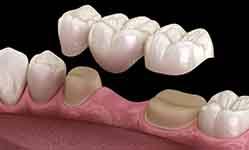
A traditional dental bridge is the standard kind that’s been around for many decades. In general, it consists of dental crowns fused to the sides of a pontic. It thus relies on your nearby natural teeth or “abutments” to stay in place.
In most cases, a traditional dental bridge is the least costly of the two types. Its materials and features make it less expensive than an implant-based kind. Still, the dentist does have to remove some of your enamel to place it.
Implant Bridge
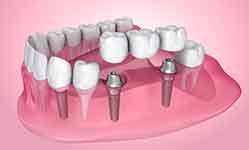
An implant bridge relies on dental implants – small titanium posts placed in your jaw’s sockets. Once these posts fuse with your jawbone, they secure the final restoration and stop it from moving around. A proper implant bridge won’t loosen or fall like other prosthetics sometimes do.
Due to its implant posts, an implant bridge won’t alter your existing teeth; a dentist doesn’t “prep” abutments to place it. However, this type costs more than the standard option.
The Benefits of Getting a Dental Bridge

By getting a dental bridge, you’ll receive many great benefits. The most common of these are:
- A Gorgeous Grin – A dental bridge’s teeth are made of porcelain, so they blend seamlessly with your whole smile.
- Better Oral Health – Once a dental bridge “bridges” your smile gap, it reduces the spread of harmful bacteria and stops other teeth from tilting.
- Easier Eating – Your dental bridge should help you chew certain foods more easily.
- Lasting Results – Most dental bridges last 5-15 years, and well-maintained ones can reach lifespans of 20 years or more!
By now, you’ve hopefully seen just what a dental bridge can offer your smile. Consider whether this restoration would work for you and book a visit with us.
Dental Bridges FAQs
Can You Take a Dental Bridge Out?
While you may have heard of a “removable bridge,” this is a misnomer some people use to refer to a partial denture. A true dental bridge will be fixed in place with two dental crowns cemented to healthy teeth or two dental implants surgically inserted into the jawbone, so it should be impossible for you to remove your appliance without the help of a qualified dentist. A traditional bridge may last up to fifteen years and an implant bridge may last for several decades with excellent care, so please contact the team at BGH Dental if you find you are able to remove your device without assistance from a professional.
How Long Should a Dental Bridge Last?
A traditional dental bridge may last between five and fifteen years if it receives proper care, and an implant bridge may last for decades with excellent maintenance habits. However, your appliance’s lifespan may be influenced by the material it is made from. Metal dental bridges may last longer than metal-free ones, but the difference is often negligible. The most important factor for how long your bridge will last is how well you take care of it, and a few excellent ways to keep your device in great shape include:
- Excellent oral hygiene habits.
- Visiting us regularly for exams and cleanings.
- Making smart eating decisions.
- Refraining from bad oral habits like chewing on ice, metal, plastic, or wood and opening bottles or packages with your teeth.
Bridges that replace teeth closer to the front of the mouth may last longer than devices that replace teeth in the back because they endure less pressure during the chewing process.
How Many Teeth Can a Dental Bridge Replace?
Dental bridges can be excellent ways to replace one to four teeth depending on the patient’s oral health and how the device is supported. Traditional bridges are usually used to replace only one or two teeth since appliances that replace three or more can become unstable. However, implant bridges may be able to support more artificial teeth because they are anchored securely to the jaw by titanium posts designed to integrate with the patient’s bone structure.
Can Dental Bridges Get Cavities?
Dental bridges are not made from organic enamel or dentin, so it is impossible for them to develop the oral infections called cavities. However, traditional bridges can be compromised if the natural teeth supporting them become decayed, and implant bridges may fail if the gum tissue supporting them recedes. To prevent this, practice excellent oral hygiene, visit our office in Greenfield regularly for checkups and cleanings, and limit your intake of sugars, acids, and starches.